


Chopping boards
Explore our range of chopping boards




Looking for a particular range?
We offer a variety of chopping boards in our Classic and Spectrum series – colourful options and wooden boards.


Chopping boards for every kind of cooking
Practical and functional options in wood and plasticA chopping board is one of the most frequently used tools in the kitchen, so it is important that your boards, like all other kitchen equipment, suit your needs.
FAQ
Information about our chopping boards
Choosing between a wooden and plastic chopping board is largely a matter of preference. The myth that plastic is always more hygienic than wood has been disproved. Tests by the Danish Technological Institute have shown that wood is a hygienic material in which bacteria have poorer living conditions than in materials such as plastic.
Other factors can therefore guide your choice. A plastic board can go in the dishwasher, while a wooden board must be washed thoroughly by hand with soap and water. Whatever the material, thorough cleaning is essential.
Appearance and intended use also matter. Wooden boards may look more elegant, while some plastic boards are well suited to chopping vegetables. Heavier, more robust wooden boards are suitable for carving larger cuts of meat or whole loaves. Having boards in different sizes is a good idea.
Boards made from marble or slate are attractive for serving, but their hard surfaces can damage and dull a knife's edge.
It is a good idea to keep at least two different chopping boards in your kitchen: one for raw meat and fish and one for fruit and vegetables. Always use them for their separate purposes. Separate boards and thorough cleaning reduce the risk of bacteria spreading from one board to another.
Keep these precautions in mind:
- Use different boards for meat and vegetables
- Change both knife and board when switching between meat and vegetables
- Change or wash them immediately after use with raw meat
- Keep raw meat separate from ready-to-eat foods such as salad and bread
- Clean wooden boards with washing-up liquid, rinse with the hottest possible water and dry thoroughly
- Plastic boards can go in the dishwasher
- Store boards in a dry place.
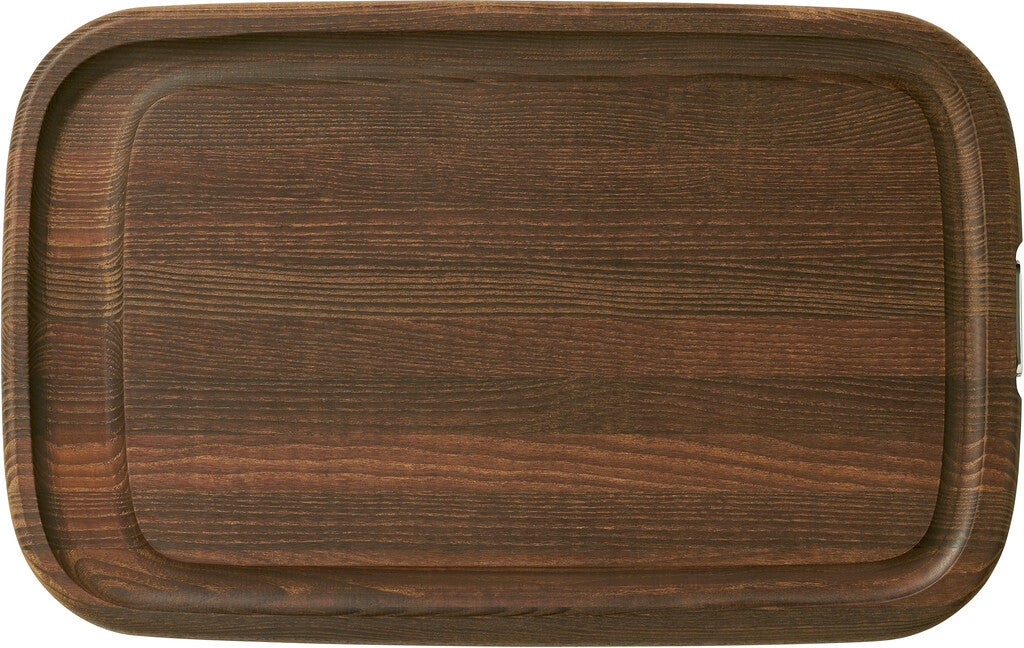
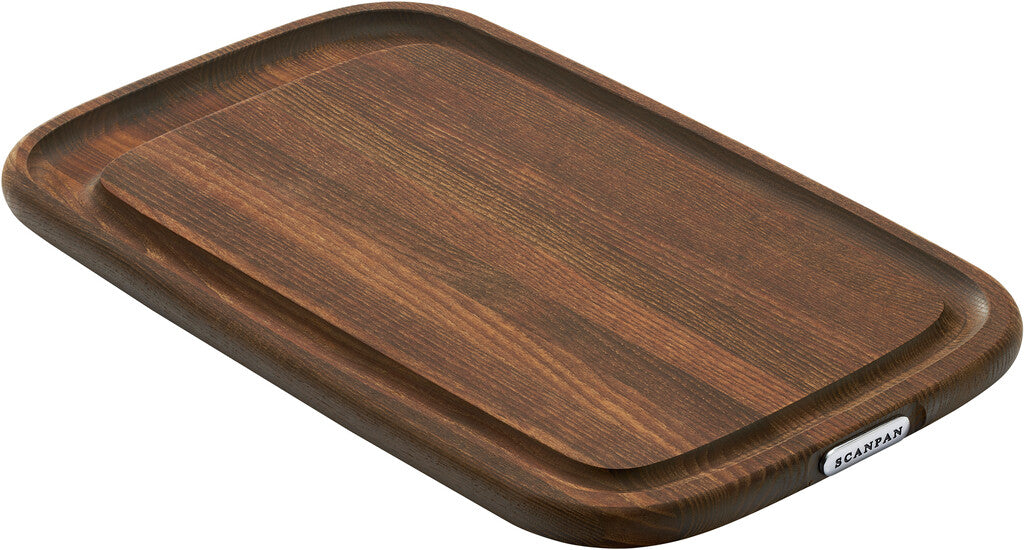
Both SCANPAN's oil-treated bamboo boards from the Classic series and the sturdy, high-quality plastic boards from the Spectrum series are available in different sizes. The bamboo range consists of one chopping block and two carving boards with sloping juice grooves for improved liquid collection. The plastic boards come in three sizes, and the large board has a practical groove for collecting meat juices and other liquids.
Both types are gentle on knife edges and therefore help extend the life of your valued kitchen knives.
A chopping board is indispensable. A good knife and a good chopping board go hand in hand, whatever you are cutting. Cutting directly on a table is bad for both the knife and the surface. Remember the other practical accessories for your kitchen knives too.
A knife block with a brush insert is practical, flexible and looks attractive on any kitchen worktop. Maintain chef's knives and other sharp knives regularly with a honing steel, and use a knife sharpener when the blades become dull.